Severn Tree Removal has been diagnosing and treating tree disease in Severn, MD for more than 20 years, and the first thing worth saying is that a great many trees people describe as diseased are not. They are declining for a physical reason — a buried root collar, compacted soil, root loss to a trench, drought stress on fast-draining sand — and treating those with a spray accomplishes nothing.
So plant health care here starts with a diagnosis rather than a product. We look at the root collar, the soil, the site history and the crown together, because the crown is where symptoms show up and almost never where the cause lives. What comes back is a finding: what is wrong, whether it is treatable, and what treatment would actually change.
The other half of this work is being straight about pests. Some genuinely change what happens to a tree and some do not, and the difference is worth money to a homeowner deciding whether to spend on a treatment program or on a removal.
Diagnosis Before Treatment
Root Collar Excavation and What It Finds
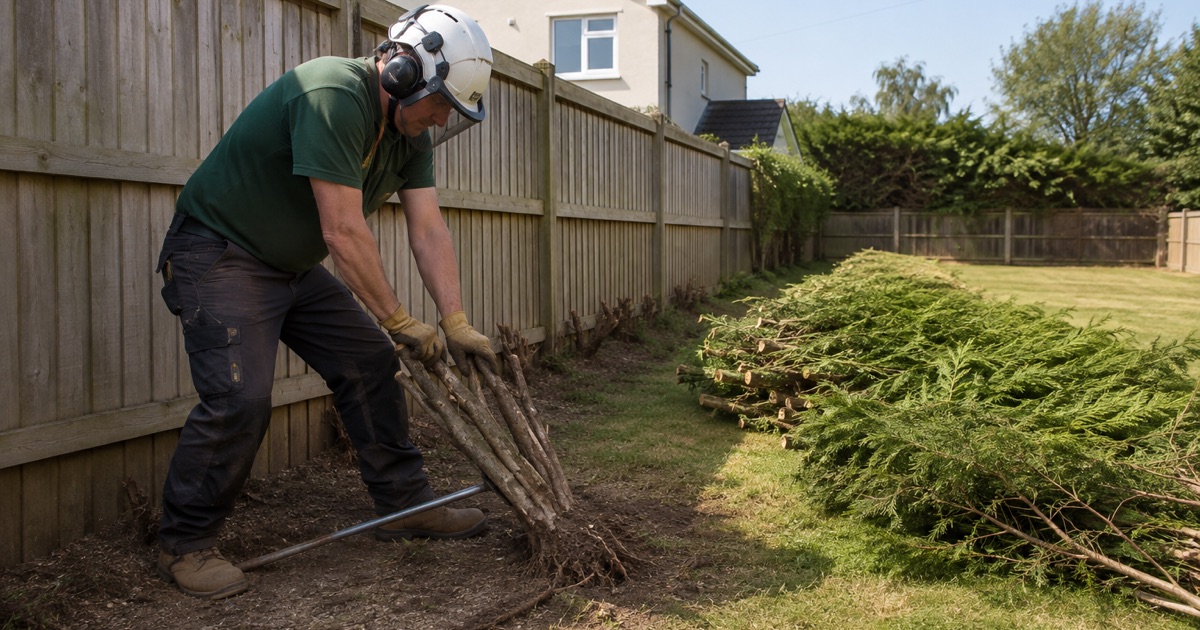
A tree planted too deep, or one where mulch and soil have built up against the trunk over the years, slowly girdles itself below grade. An air spade excavates the collar without cutting roots, exposes circling and girdling roots, and shows whether the flare is where it should be. On a declining landscape tree of twenty or thirty years, this is the most common finding there is.
Soil Compaction and Decompaction
Construction traffic, parked vehicles and years of foot traffic compress soil until roots cannot get air or water through it. Because 41.9 percent of Severn’s housing was built in 2000 or later, a very large share of local trees stood through a construction phase. Air-spade decompaction and organic amendment within the critical root zone is a slow fix that works, unlike anything applied to the leaves.
Reading Crown Symptoms Correctly
Thin canopy, early color, small leaves, dieback from the tips and epicormic shoots along the scaffolds all say the same thing: the tree is not getting what it needs. They do not say why. We read them against the site rather than matching them to a picture, because the same crown on two different lots regularly has two different causes.
When the Honest Answer Is Removal
Decay in the root plate and extensive root loss cannot be treated, and a treatment program sold against either one is a way of spending money on the way to the same removal. We say when a tree is past the point of intervention, and we say when it is not, which is the only way the first statement is worth anything.
Pests That Change the Outcome
Emerald Ash Borer
Emerald ash borer has been established in Maryland since 2003 and it kills ash. The practical consequence for a homeowner is timing: dead ash goes brittle within about three years of mortality, and a brittle ash is no longer a conventional climbing removal. An ash still alive can be treated preventively; an ash that died two summers ago is a scheduling problem, not a health problem.
Spotted Lanternfly: What It Actually Does
Maryland’s spotted lanternfly quarantine went statewide effective 2026-03-06, so every city we serve is inside it. The Maryland Department of Agriculture is clear that the insect does not kill trees. What the quarantine regulates is the movement of logs, stumps, firewood and yard waste, so it constrains disposal on every job rather than diagnosis on any of them.
Box Tree Moth Is Not Here
Maryland’s box tree moth quarantine covers Allegany, Frederick, Garrett and Washington counties. None of them is in this service area, which is a useful negative if you have boxwood and have read something alarming. Boxwood problems around Severn are far more likely to be blight, leafminer or winter injury, and those are diagnosed differently.
Native Species and What Grows Here
Loblolly pine is native and common in this area and the coniferous share of the local woodland is genuine, so pine problems are a regular call. Northern red oak, by contrast, is documented as rare on the coastal plain, and an identification of one is worth confirming before anyone treats for a species-specific problem it may not have.
Treatment, Pruning and Structural Support
Sanitation Pruning Under ANSI A300
Removing dead, dying and diseased wood is often the whole treatment, and it is specified as crown cleaning under ANSI A300, the standard Maryland incorporates by reference under COMAR 08.07.07. It reduces the inoculum in the tree, takes out the pieces most likely to fail, and does it without the collateral damage of heavier pruning.
Cabling and Bracing for Structural Defects
Co-dominant stems with included bark are a structural defect rather than a disease, and they are the classic split-in-a-storm failure on an otherwise healthy tree. A cable installed to specification shares load between the stems and a brace rod resists the split directly, which often buys a specimen tree decades at a fraction of removal and replacement.
Watering, Mulching and the Cheap Interventions
On deep, fast-draining Patapsco sand, water moves through the root zone quickly and young trees dry out faster than owners expect. Correct mulching — a shallow ring, never against the trunk — and deep infrequent watering in a dry stretch are free or nearly free, and they resolve more decline in young landscape trees than any treatment we could sell you.
Construction Damage and Root Zone Protection
The most common way a healthy mature tree is killed around here is a trench, a driveway extension or a machine parked inside its root zone during a project. The damage is done in a day and the crown does not show it for two or three years, by which time nobody connects the two. Where work is planned near a tree worth keeping, protecting the critical root zone in advance costs almost nothing compared with removing the tree later.
- 20+ Years in Anne Arundel County
- Free On-Site Estimates
- 24-Hour Storm Response